
Protein is having a moment. It is being added to biscuits, cereal, coffee, and anything that will hold a label. That can make ordinary food seem strangely inadequate: as though strength only comes in a tub with a scoop.
For someone eating a whole-food plant-based diet, the worry often sounds more urgent: Can I train, get stronger, and still eat dal, beans, tofu, grains, vegetables, nuts, and seeds? The short answer is yes, but it is not quite the same as saying every plant-based meal is automatically ideal for every training goal.
The useful middle ground is less exciting than the internet: build a varied diet around real protein foods, train consistently, eat enough overall, and do not ignore the nutrients that need a plan. A recent study gives us a helpful reason to move past both extremes - neither dismissing plant protein nor pretending that food quality and meal design never matter.
Key takeaways
- A well-planned plant-based diet can support resistance training and muscle maintenance.
- The whole diet matters more than finding one "perfect" protein or pairing foods at every meal.
- Soy foods, dals, beans, chickpeas, lentils, peanuts, nuts, seeds, and whole grains all have a role; use a variety.
- Newer research suggests that a very high-carbohydrate, high-fibre plant meal immediately after exercise may not behave exactly like a concentrated protein source. That is useful context for serious athletes, not a reason to fear rice and dal.
- Do not copy a high-protein plan from social media if you have kidney disease, diabetes medicines that can cause low sugar, unplanned weight loss, or another medical concern.
Can plant protein actually support muscle?
Muscle adapts to resistance training. Protein supplies the building blocks, but it is not a magic replacement for training, sleep, or enough total food. This applies whether protein comes from plants or animals.
Plant proteins are not all alike. Soy is generally a higher-quality and more concentrated plant protein source than many other plant foods. Dals, beans, chickpeas, whole grains, nuts, and seeds contribute too, often with useful fibre and micronutrients. Their protein is packaged with different amounts of carbohydrate, fat, fibre, and water, which is one reason a big bowl of food and a shake are not interchangeable experiences.
The evidence is nuanced. In a 2025 trial of healthy, active young adults who were given adequate protein and did resistance exercise, short-term muscle protein synthesis was similar on vegan and omnivorous dietary patterns. That does not prove every vegan diet is equally effective, or tell us exactly what one individual needs. It does show that a planned vegan pattern should not be written off.
At the same time, a 2025 systematic review of randomised trials found a small overall advantage for animal protein for muscle mass, while strength and physical performance were generally similar. Soy protein performed similarly to milk protein in several of the included comparisons. The fair conclusion is not "plant protein fails" or "source never matters." It is that a plant-based diet can work, but people who are trying to gain muscle should make their protein choices deliberately instead of relying on tea, toast, fruit, and occasional dal.
What the newest post-workout study does - and does not - mean
In 2026, a small randomised study looked at young adults after a workout. It compared a rice-and-black-beans meal with a nutrient-matched mixture of isolated ingredients. Both provided 20 grams of protein but also a large amount of carbohydrate. The two plant-based options produced similar short-term muscle-protein responses, and neither gave the quick response seen in a previous lean-pork comparison.
This is interesting, but it is easy to overread. It was a short, tightly controlled study of 11 young adults; it did not show that rice and beans are "bad" or that a whole-food plant-based diet cannot build muscle over months. It mainly questions the popular idea that simply combining two plant proteins creates a special immediate post-workout effect.
For most people, there is no need to panic about a mythical 30-minute protein window. Eat a normal, balanced meal after activity when you can. But if your goal is competitive sport, rapid muscle gain, or training more than once a day, the amount, concentration, and timing of protein become more relevant. A sports dietitian can help decide whether a more concentrated option, such as tofu, soy milk, or a suitable plant protein product, makes sense around training. That is a performance conversation, not a verdict on the healthfulness of dal and rice.
The "complete protein" rule is less strict than it sounds
You may have heard that lentils are incomplete, rice is incomplete, and the two must meet in exactly the same meal. In reality, plant foods contain amino acids in different proportions, and a varied diet across the day is what matters for most healthy people.
Dal with rice, rajma with rice, chana with roti, and hummus with a whole-grain roti are good, familiar meals. Eat them because they are tasty, filling, and nutritionally useful - not because you must solve a laboratory puzzle at each plate.
The exception is a person with unusually high needs or a restrictive intake: for example, a hard-training athlete, an older adult with poor appetite, or someone recovering from illness. Those situations deserve a closer look at total protein, calories, meal pattern, and medical status. More is not automatically better, especially when a person has kidney disease or has been told to limit protein, potassium, phosphorus, or fluids.
Build meals around a protein anchor
The simplest practical habit is to make sure every main meal contains a recognisable protein food. Do not leave protein as an afterthought sprinkled on top of a plate of refined cereal or vegetables.
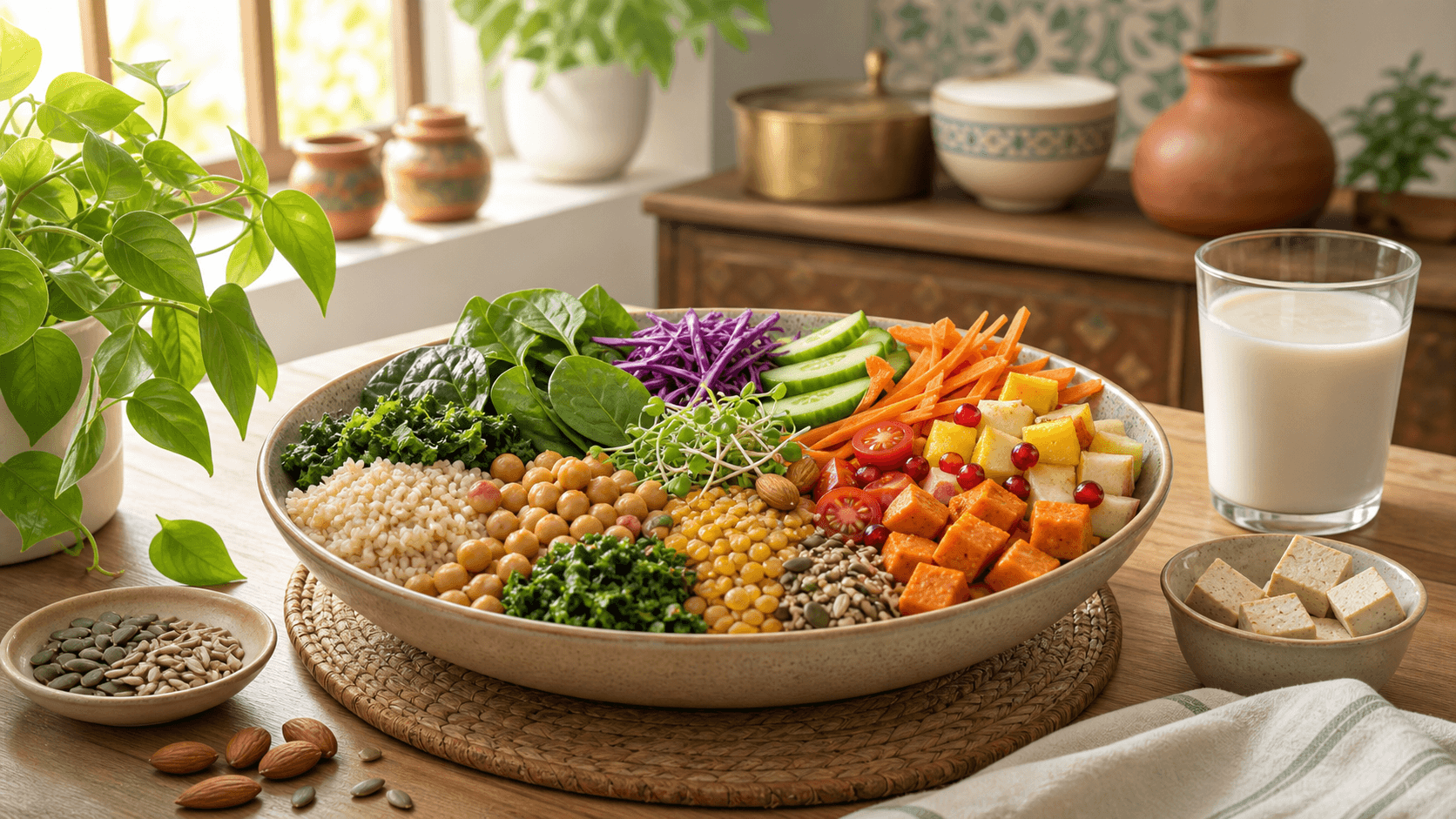
Here are ordinary whole-food ways to do that:
- Breakfast: Moong or besan chilla with vegetables and peanuts; tofu bhurji with roti; or oats with fortified soy milk, fruit, and ground flaxseed.
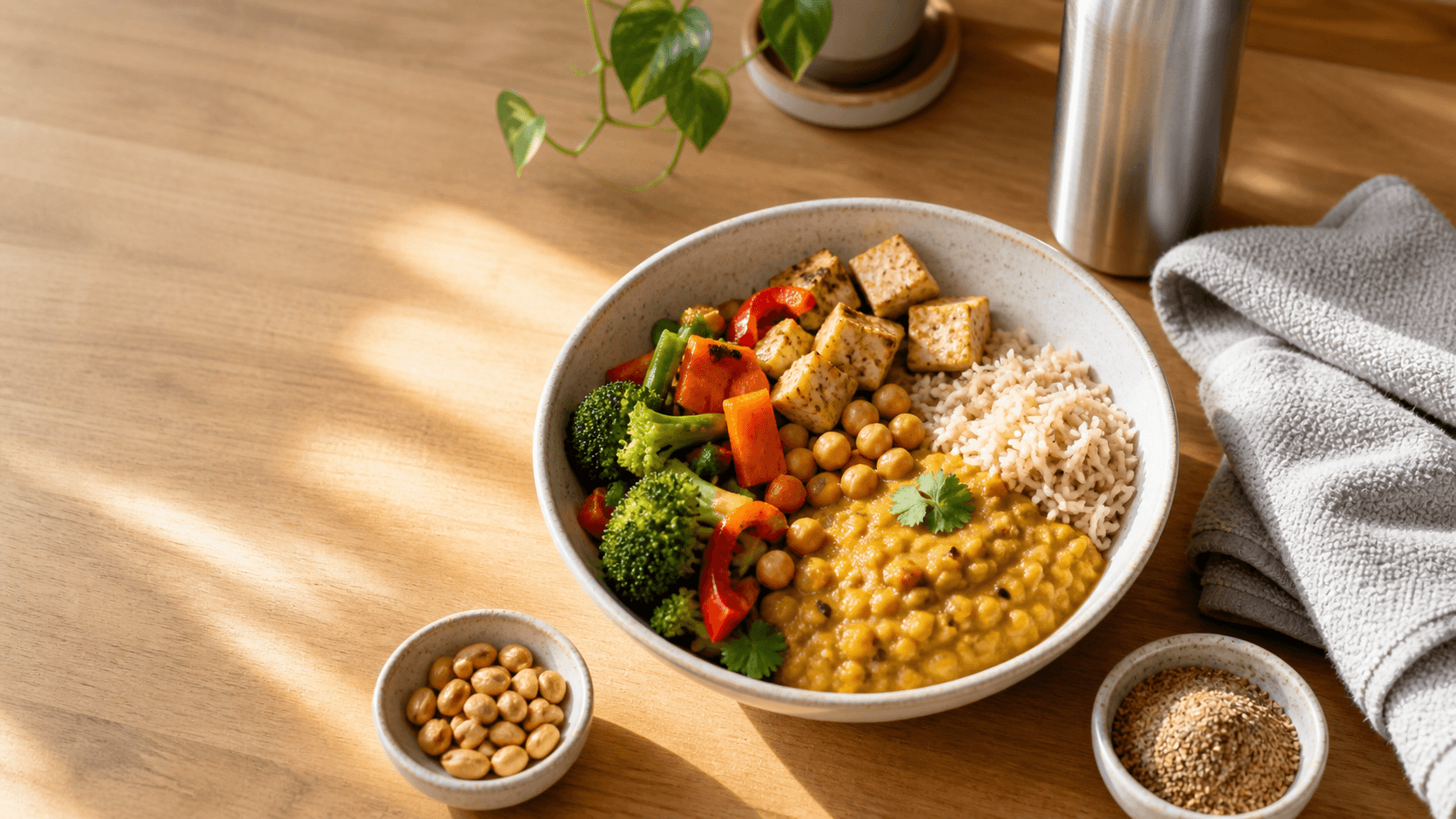
- Lunch: Dal plus a generous serving of chana, rajma, lobia, or tofu alongside rice or roti and vegetables. If dal is the only protein item, make it a meaningful part of the meal rather than a thin side bowl.
- Dinner: Mixed-dal khichdi with vegetables and peanuts; chole with roti and salad; or a tofu and vegetable stir-fry with a whole grain.
- A busy-day snack: Roasted chana, boiled chickpeas, peanuts, soy yoghurt if it is fortified, or a homemade bean chaat are usually more useful than treating a sugary "protein" snack as health food.
Soy deserves a special mention because tofu, soy chunks, tempeh, and unsweetened fortified soy milk are convenient, protein-rich choices. They do not need to be eaten at every meal, and they are not a substitute for variety. But they can make a whole-food plant-based diet much easier for someone who trains.
Aim for a pattern, not a daily scorecard. The broader guide to building a whole-food plant-based diet covers the basics of vegetables, grains, pulses, and the nutrients that need particular attention.
Do you need a protein powder?
Not by default. Whole foods bring fibre, vitamins, minerals, and the comfort of an actual meal. For most recreational exercisers, regular meals with a protein anchor are a more useful starting point than buying supplements.
A plant protein powder or ready-to-drink product can be a convenience tool, not a badge of seriousness. It may help someone who trains hard, struggles to eat enough after exercise, is short on time, or has an individual target set by a dietitian. Check the ingredient list and added sugar rather than trusting a large front-of-pack protein claim. And do not use a shake to cover up an eating pattern that is low in meals, calories, or vegetables.
If you choose a packaged product, it does not stop your diet from being plant-based. It is simply less "whole-food" than dal or tofu. The question is whether it solves a real practical problem for you.
Muscle is not the only nutrition detail that matters
An intense focus on protein can make people forget the less glamorous essentials. A fully vegan diet needs a reliable vitamin B12 plan; B12 is not reliably supplied by unfortified plant foods. Iron, calcium, vitamin D, iodine, and omega-3 fats also deserve attention. The right approach depends on the person's diet, age, health, and blood results - not on a viral video.
There is a second trap: accidentally eating too little. People often increase vegetables and pulses while cutting meals, oil, grains, and snacks so sharply that they do not have enough energy to train, recover, or maintain weight. If you are feeling weak, dizzy, or are losing weight without trying, do not assume it is a healthy "adaptation." Persistent weakness needs a wider look than one nutrient trend.
For someone managing diabetes, changing food and exercise together can also alter blood sugar. Do not reduce or stop prescribed medicine on your own. And if you are working on blood pressure, remember that plant-based packaged foods, mock meats, sauces, instant meals, pickles, and papad may still be high in salt; keep checking BP rather than relying on how well you feel.
- Living with kidney disease, liver disease, significant anaemia, or a gut condition that affects absorption
- Pregnant, breastfeeding, planning pregnancy, feeding a child, or older and losing strength or weight
- Managing diabetes with insulin or medicines that can cause low sugar
- Recovering from surgery, illness, or an eating disorder
Seek medical review sooner for rapid or unplanned weight loss, persistent fatigue, repeated dizziness, breathlessness, numbness or tingling, vomiting, or a major fall in appetite. Do not let a gym diet delay diagnosis.
The bottom line
You do not need to abandon whole foods to get stronger, and you do not need to make every meal a science project. A useful plant-based strength routine is remarkably ordinary: resistance training, enough food, a protein anchor at regular meals, varied plant foods, and a reliable B12 source if you are vegan.
If you are a competitive athlete or have a demanding muscle-gain goal, be more intentional about the amount and concentration of protein around training. For everyone else, start with the food already close to home: dal, beans, chana, tofu, soy chunks, nuts, seeds, vegetables, and grains. Consistency will do more for strength than the latest protein label.